
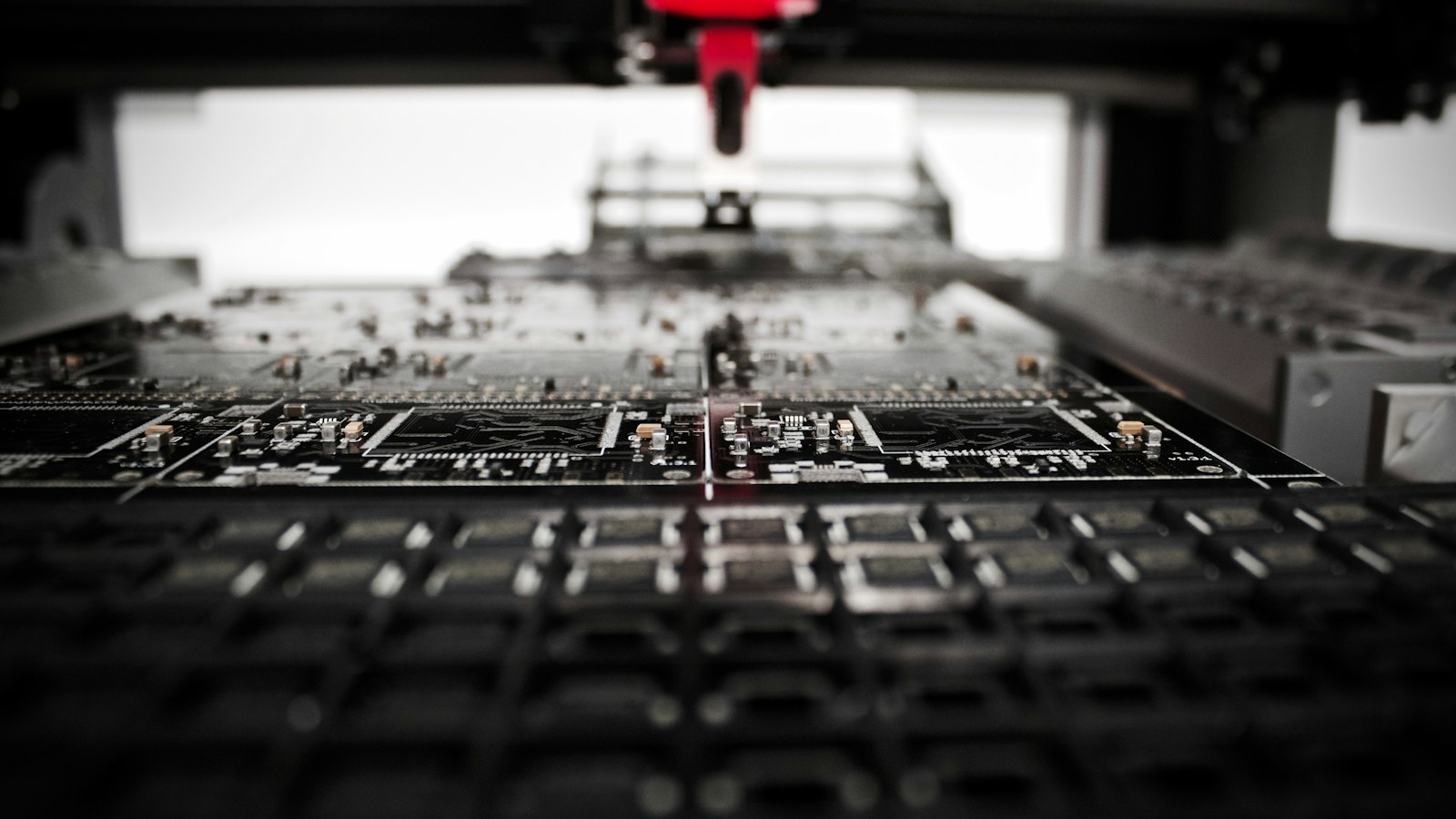
Most of the world’s chargers, adapters and battery packs are made in southern China, and Shenzhen alone has hundreds of power supply factories. Some are excellent; others are trading companies that resell whatever is cheapest that week. A charger is a safety product that sits on a mains socket next to people, so choosing the wrong supplier is not just a quality problem, it is a liability. This checklist is the one we would use if we were on the buyer’s side of the table.
1. Confirm you are talking to a factory
Ask for the business licence and check that the registered scope includes manufacturing. Then ask for things only a factory has:
- photos or a video call showing the SMT line, assembly lines and test area, filmed live rather than from a brochure;
- the production capacity per line and per month;
- the names of the engineers who will handle your project.
Trading companies are not always bad, but you should know who actually builds your product, and whose quality system you are relying on.
2. Check the quality system
A serious power supply factory runs to ISO 9001 and can show you how it works on the floor:
- Incoming inspection of components (capacitors, transformers, MOSFETs, cases).
- In-circuit and functional tests on every unit, not just samples.
- Hi-pot (dielectric strength) test on every unit, because it is the test that proves the insulation between mains and output.
- Burn-in: units running under load, usually at elevated temperature, for several hours before packing. At our own factory every unit is burned in for 24 hours.
- Final inspection to an agreed AQL level (ISO 2859-1).
Ask to see the test records for a recent batch. A factory that tests properly keeps records.
3. Look at real certificates
Certificates are easy to fake and easy to misunderstand. For each market you sell in, ask for the certificate and the test report behind it:
- CE declaration plus LVD/EMC test reports (EN IEC 62368-1, EN 55032/55035) for Europe;
- FCC SDoC and test report for the US, plus UL/ETL if your customers require it;
- UKCA, PSE, KC, SAA/RCM for the UK, Japan, Korea and Australia.
Check that the model number, ratings and factory address on the certificate match the product you are buying. Then verify UL or TÜV certificates on the certification body’s online database. Our guide to power supply certifications explains what each mark covers.
4. Test the engineering team
Send a short technical brief and see how they respond. Good signs:
- they ask about your device’s peak current, connector and cable length, not only the wattage;
- they explain how the design meets efficiency rules (US DoE Level VI, EU 2019/1782);
- they suggest a standard platform that already has certificates, rather than a brand-new design you will have to certify from scratch.
A factory with its own R&D can modify output voltage, current, cable and casing; a factory without one can only sell what is in its catalogue.
5. Order samples the right way
- Order at least 5–10 samples, not one.
- Test them yourself or at an independent lab: output voltage under load, ripple, temperature rise, efficiency, and behaviour with your actual device.
- Keep one golden sample signed by both sides. Mass production is inspected against it.
6. Agree the commercial terms in writing
Your purchase contract or PO should state:
- the specification and golden sample reference;
- the certificates to be supplied with the goods;
- MOQ, lead time and penalties for late delivery;
- warranty terms (12–24 months is normal for adapters) and how defective units are handled;
- Incoterms (FOB Shenzhen, CIF, DDP) and payment terms (a deposit and balance before shipment is typical for new customers).
If you are sharing a custom design, sign an NNN agreement (non-disclosure, non-use, non-circumvention) that is enforceable in China, not just a Western-style NDA.
7. Inspect before shipment
For the first orders, book a pre-shipment inspection with a third-party inspector, or visit yourself. They check quantity, packaging, labels, appearance and a sample of functional and hi-pot tests against your AQL.
8. Plan the logistics
Chargers ship easily by sea or air. Battery packs are dangerous goods and need UN 38.3 test summaries and special handling, so check this before you quote delivery dates to your own customers.
Red flags
- Prices far below everyone else’s on the same specification.
- Certificates in a different company’s name, or for a different model.
- No hi-pot or burn-in records.
- Reluctance to show the factory live.
- “We can do anything” answers to technical questions.
About Daxpoo Group
Daxpoo Group has manufactured power supplies in Shenzhen since 2003. Our factory company, Daxpoo, makes laptop adapters, USB-C chargers, e-bike chargers and lithium battery packs for brands and distributors, and welcomes factory visits and video audits. Contact us to start with samples.
